Vernal Pools
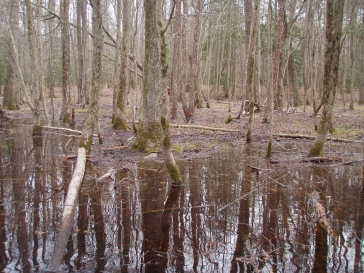
As the name suggests, vernal pools, also known as seasonal or ephemeral pools, usually fill with water during the winter/spring and generally dry out during the year. This means that the pools do not contain fish. Vernal pools are excellent breeding habitat for amphibians since there are no fish to eat the amphibian eggs. Not every spring-time puddle is a vernal pool. To be considered a vernal pool, there are several characteristics:
- The presence of "hydric" soils that indicate prolonged wetting.
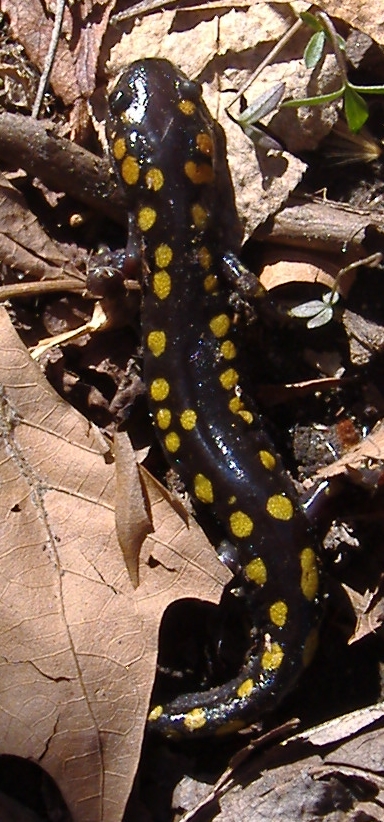
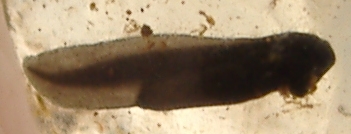
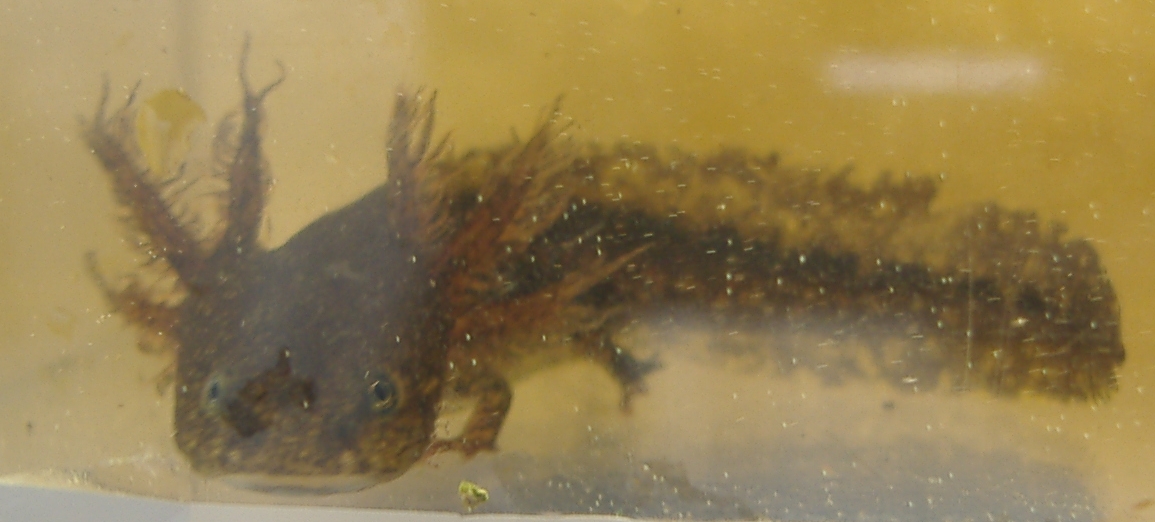
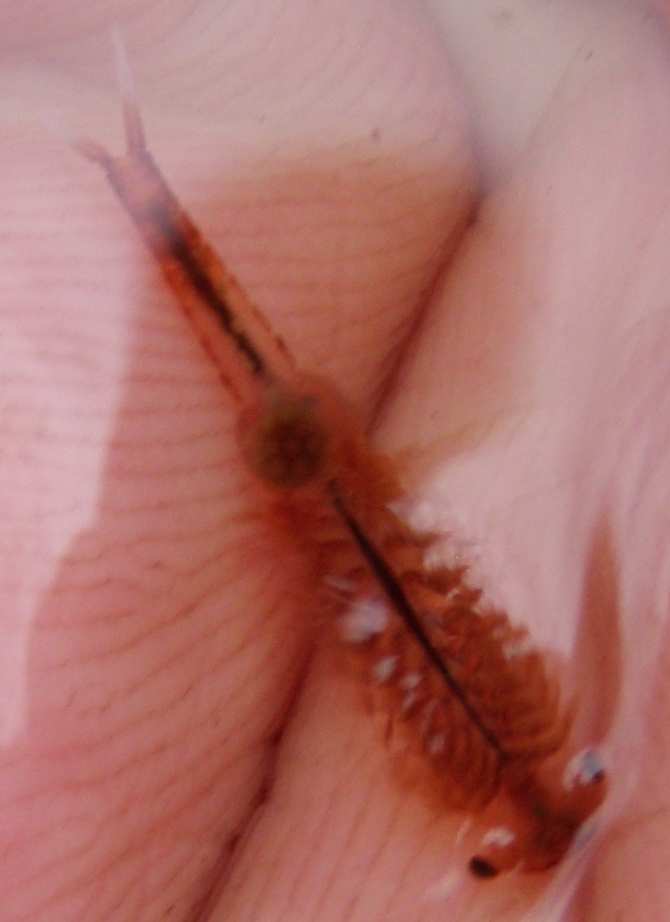
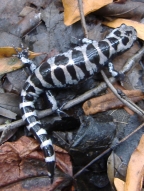
- The presence of one or more of the "obligate species" that require vernal pools for breeding. Locally the obligate species include wood frog (Lithobates sylvaticus), marbled salamander (Ambystoma opacum), spotted salamander (Ambystoma maculatum), and other mole salamanders (Ambystoma spp.). Fairy shrimp (Anostraca: Eubranchipus) are also obligate species.
- Characteristic vegetation
Massachusetts has a formal certification processfor identifying and protecting vernal pools. Their vernal pool web site has resources including a certification guide manual that provides a more complete discussion of criteria for defining vernal pools.
Monitoring Protocol for Larger Vernal Pools
I led the re-design of the 2008 vernal pool survey at Jug Bay Wetlands Sanctuary to collect data on egg masses and tadpoles/larvae abundance. The study site is a large (up to 1.8 ha) vernal pool which is too large to survey from the perimeter as many published protocols describe. The new design uses a carefully specified procedure along random transects to support statistically valid estimates of the population of the entire pool.
This new protocol along with supporting materials were presented as a poster at the Maryland Water Monitoring Council Vernal/Seasonal Pool Workshop in March 2008. Details about the protocol along with a poster and related materials are also available here.
Additional Resources
- The Vernal Pool Association provides a large amount of vernal pool information as well as resources.
- A Field Guide to the Animals of Vernal Pools, (2009) from the Massachusetts Division of Fisheries and Wildlife, $12.
- An Introduction to Mid-Atlantic Seasonal Pools, downloadable PDF file from the US Environmental Protection Agency. The EPA Vernal Pool page provides an overview of vernal pools and numerous links to further resources.
- A Field Guide to Amphibian Larvae and Eggs of Minnesota, Wisconsin, and Iowa, as a downloadable PDF file and interactively on the site from the US Geological Survey. The species are not a perfect match with Maryland species, but there are many commonalities.